
1 / 7 · Click to enlarge
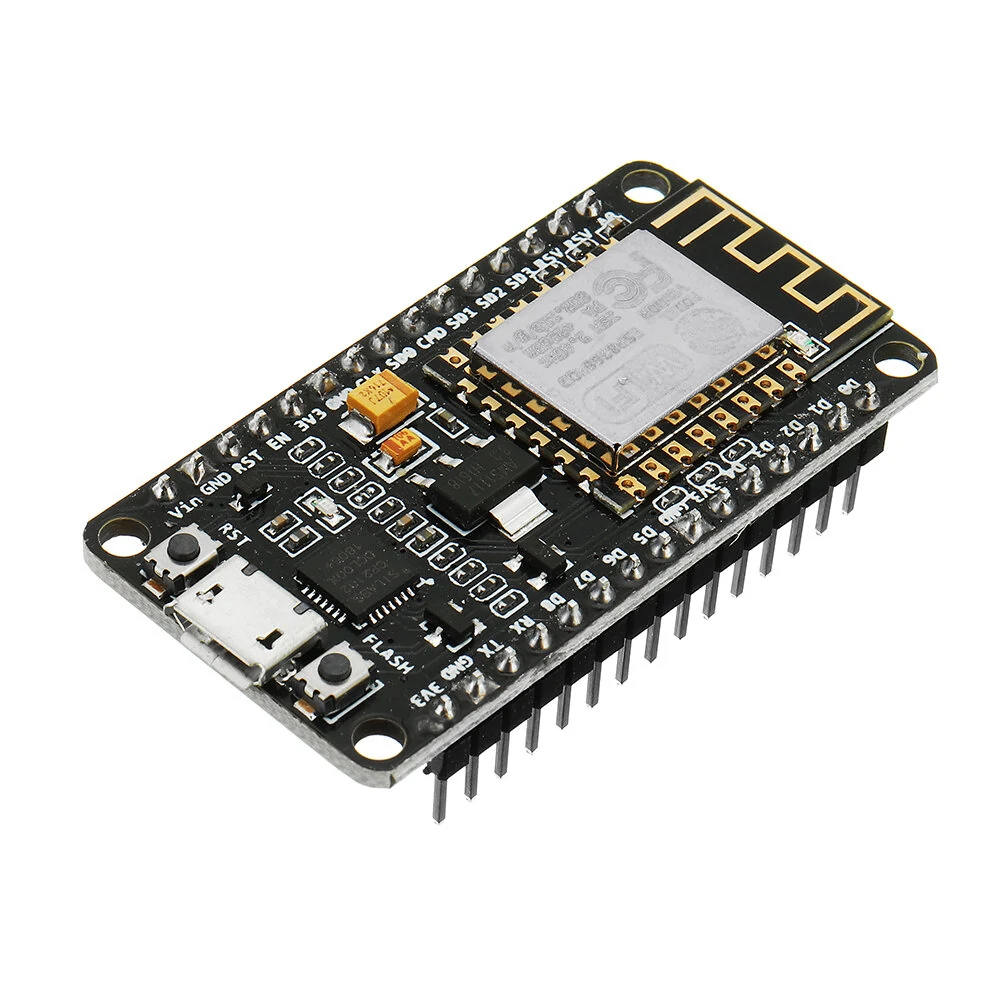
TTGO ESP32-S WiFi Wireless Module Type-C Connector TF Card Slot Development Board
 ESP32-S
 WG0193 Arduino IDE
 PSARM 8M IP5306
 T-Energy
 0.96 OLED 433Mhz
 SX1278 LoRa 433MHz
The TTGO ESP32-S WiFi Wireless Module Type-C Connector TF Card Slot Development Board is a mid-range battery protection module designed for everyday users. It features One Package Weight: 0.02kgs / 0.05lb and One Package Size: 15cm * 12cm * 1cm / 5.91inch * 4.72inch * 0.39inch.
Available Offers
Free Delivery on this order. No minimum order value.
15-Day Easy Returns — hassle-free return & full refund.
Secure Payment — 100% safe checkout with UPI, Cards & Net Banking.
Available Offers
5% Cashback
Pay with UPI & get 5% cashback (up to ₹50) via Razorpay
No-Cost EMI
Available on select bank cards at checkout. 0% interest for 3 months.
Free Shipping
Free delivery on all orders. No minimum order value.
Cash on Delivery
COD available on orders up to ₹5,000 across India.
Quick Specs
Ideal For
About This Product
The TTGO ESP32-S WiFi Wireless Module Type-C Connector TF Card Slot Development Board is a mid-range battery protection module designed for everyday users. It delivers reliable performance at an accessible price.
Key Specifications
- One Package Weight: 0.02kgs / 0.05lb
- One Package Size: 15cm * 12cm * 1cm / 5.91inch * 4.72inch * 0.39inch
- Best Sellers Rank (Consumer Electronics): #5699
- Best Sellers Rank (Consumer Electronics > DIY Parts & Components ): #160
- Best Sellers Rank (Consumer Electronics > DIY Parts & Components > Module): #37
Why Buy from Elecvora?
Elecvora sources this product directly, cutting out multiple middlemen. Every order includes free shipping, a 15-day return policy, and secure payment via Razorpay.
Hardware specifications 1. Chipset: ESPRESSIF-ESP32-S2 2. Flash: 4MB 3. Static SRAM: 8MB 4. SRAM: 520 kB SRAM 5. Buttons: power switch, base, start, custom 6. External device: TF card 7. USB to TTL: CH340C 8. Modular interface: SD card, UART, SPI, I2C, PWM, I2S, ADC 9. Vehicle clock: 32.768KHz crystal oscillator 10. Working voltage: 2.7V to 3.6V 11. Operating temperature range: -40 degrees Celsius ~ + 85 degrees Celsius 12. Dimensions: 63 x 30 x 6.6mm 13. Weight: 7g Power Specifications 1. Power input: USB 5V / 1A 2. Charging current: 500 mA 3. Battery input: 3.7-4.2V 4. JST connector: 2-pin 1.25mm 5. USB: Type C USB WiFi 1. Standard: FCC / CE-RED / IC / TELEC / KCC / SRRC / NCC (esp32 chip) 2. Protocol: 802.11 b / g / n (802.11n, speed up to 150Mbps, A-MPDU and A-MSDU aggregation, support 0.4uS guard interval 3. Frequency range: 2.4GHz~2.5GHz (2400M`2483.5M) 4. Transmit power: 22dBm 5. Communication distance: 300m